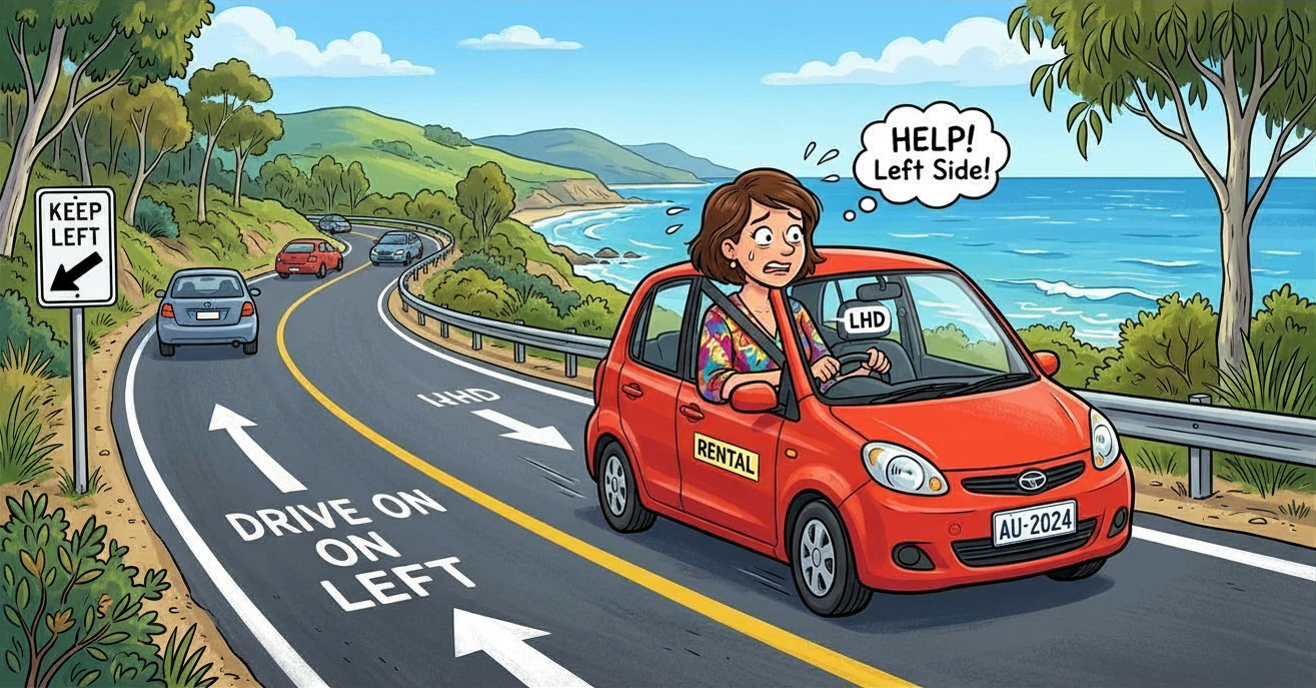
A month in, I still can't park this thing. The car's bigger than what I drove in the States, and getting it square between two lines has become a whole event. I line it up, climb out, and find I've parked like it's my first day behind a wheel. For a second, I think, maybe I've forgotten how to drive.
I haven't. I've been driving for decades. I know how to read a road, judge a gap, and feel when the car's about to do something I won't like. None of that left me. It's all still there.
What's gone sideways is the wiring. The shifter's on the left. The car's wider than my hands remember, so my instincts keep defaulting to a layout that isn't there anymore.
That's not the same as being bad at this. It just feels identical from the inside.
I think that's the quiet fear sitting beneath much of the AI conversation right now. Not "will this replace me." Something smaller and sharper. If I'm fumbling with the new tools, does my experience suddenly count for less?
It doesn't.
The judgment we built over the years is the thing that makes us good at this, with or without AI, knowing what a stakeholder means versus what they said. Smelling resistance before it has a name. Feeling when a message is going to land wrong. AI has none of that. We do.
What's new is the wiring, not the road. We still know where we're going. We're just reaching for the controls in a different place while our hands catch up.
The fumbling isn't declining. It's recalibration. And recalibration ends. The day comes when your hand finds the shifter without looking, and it's just there.
We haven't lost the skill. We're moving it to the other hand.